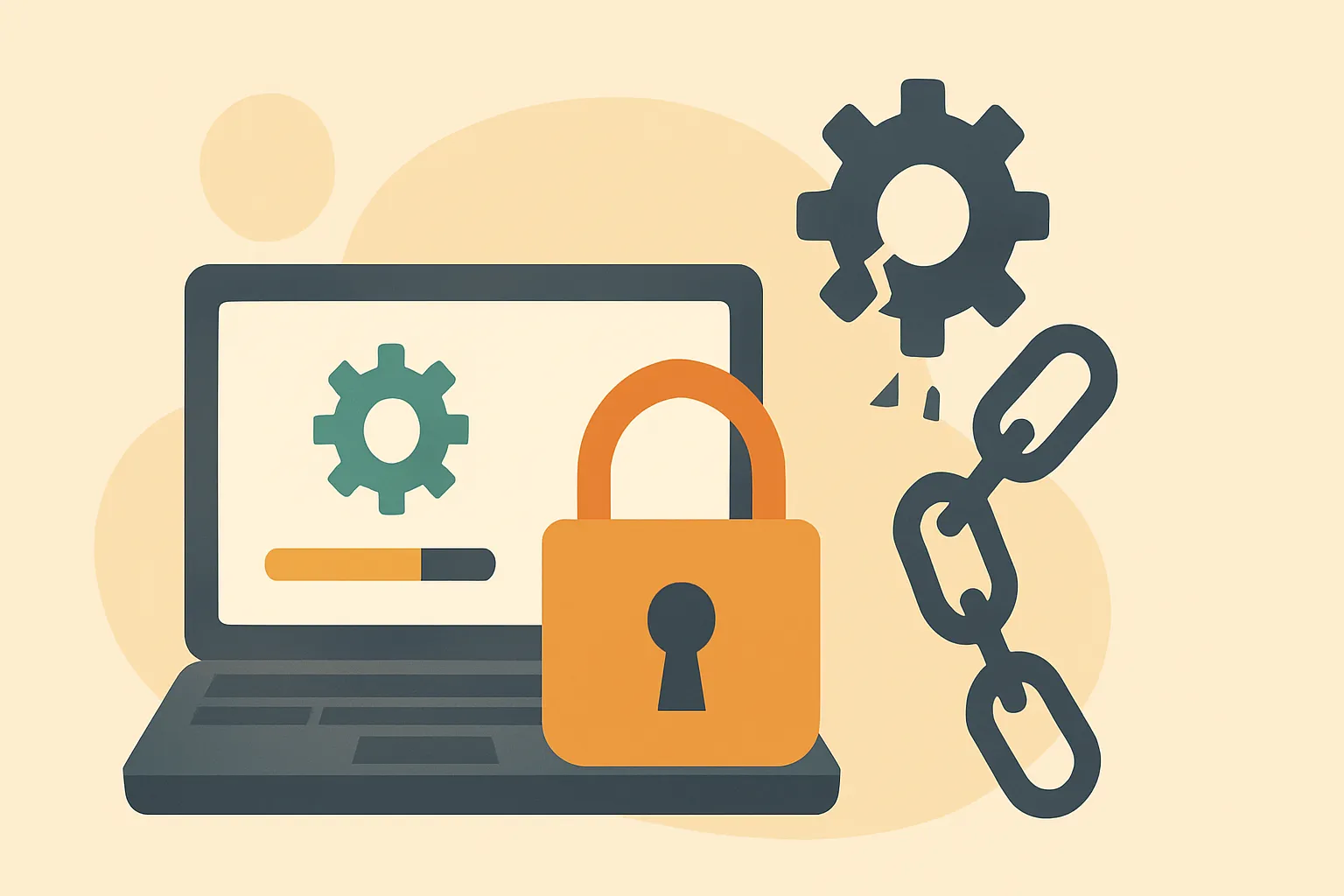
Supply Chain Malware: Risks and Lessons from SolarWinds
Software supply chain attacks have become one of the most critical threats in cybersecurity. Unlike direct intrusions, adversaries compromise a trusted link —such as a software vendor, third-party library, or update process— to distribute malware on a massive scale under a legitimate guise. The SolarWinds case (2020) is paradigmatic: the SUNBURST malware was injected into legitimate updates of the Orion product, impacting over 18,000 organizations, including U.S. government agencies and major corporations.
Nature of Supply Chain Attacks
These attacks exploit trust relationships between customers and providers. The typical cycle includes:
- Compromise of the vendor: access to the development or build environment.
- Injection of malicious code into binaries or libraries.
- Malware distribution via automatic updates or official repositories.
- Persistence and exploitation through privileged access.
Unlike traditional attacks (phishing, exploits), here the update process itself becomes the attack vector.
SolarWinds Case: Key Lessons
- Vector: compromise of Orion’s build pipeline.
- Distribution: digitally signed legitimate updates.
- Impact: long-term espionage across strategic organizations.
- Lesson: trust in vendors and digital signatures is not enough; layered defense is required.
Risks in Software Updates
- Compromised update servers.
- Abuse of stolen or compromised digital certificates.
- Unverified third-party dependencies.
- Uncontrolled automatic updates.
- Manipulated CI/CD pipelines.
Mitigation Measures
According to NIST CSF, CIS Controls, and ISO/IEC 27036, organizations should:
- Apply integrity verification (hashes, additional signatures).
- Segment build and production environments.
- Review dependencies with a Software Bill of Materials (SBOM).
- Implement continuous monitoring.
- Adopt Zero Trust for suppliers.
- Embed security validations in CI/CD pipelines.
Conclusion
Supply chain attacks show that security cannot rely solely on trust and digital signatures. SolarWinds demonstrated how widely used corporate software can turn into a massive Trojan horse. Risk management in updates requires multilayered strategies, dependency visibility, and a cyber-resilience approach against both known and unknown threats.
References
- Edwards, J. (2024). Critical Security Controls for Effective Cyber Defense. Apress.
- Edwards, J. (2024). Mastering Cybersecurity: Strategies, Technologies, and Best Practices. Apress.
- Leirvik, R. (2023). Understand, Manage, and Measure Cyber Risk®. Apress.
- Alevizos, L. (2025). Cyber Resilience Index: Mastering Threat-Informed Defense. Apress.